European Retail Real Estate: From Decline Narrative to Selective Growth
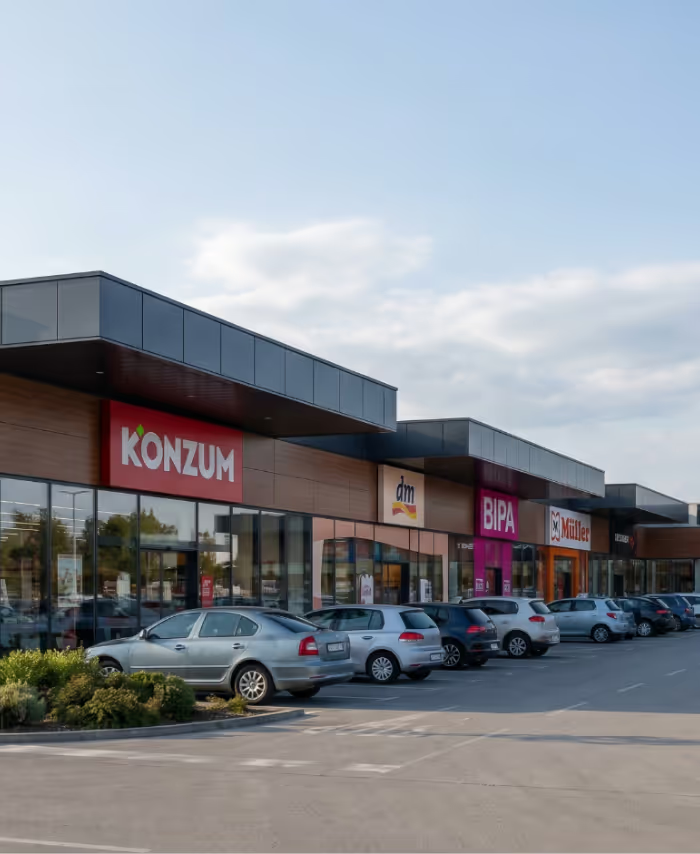
A Sector Repriced, Not Replaced
Since the pandemic, retail real estate has often been viewed as a sector in structural decline pressured by e-commerce, changing consumer behaviour, and oversupply. That narrative no longer holds.
Retail has not returned to its pre-Covid model, but it has stabilised and entered a new phase defined by selective growth and targeted investment activity. Today, it offers some of the most attractive income yields among core real estate sectors with capital flowing only to assets aligned with long-term structural trends.
Retail is no longer about scale—it is about relevance, location, and integration into everyday life.
E-commerce Maturity Is Supporting Physical Retail
As e-commerce growth across Europe matures, further expansion is becoming more complex and costly. Retailers are therefore shifting from aggressive digital scaling to optimising their physical store networks.
This transition is reflected in real estate strategies:
- Fewer large-scale store closures
- More selective portfolio optimisation
- Reinforcement of presence in prime urban locations
Physical retail is no longer being reduced—it is being refined.
Omnichannel as a Real Estate Filter
Retail has evolved into a fully integrated system, where physical stores, digital platforms, and logistics networks operate together.
As a result, real estate selection has become more strategic:
- Secondary locations are being exited permanently
- Investment is concentrated in high-performing, well-connected assets
- Stores are expected to serve multiple functions: sales, branding, and last-mile fulfilment
Leasing activity reflects this shift, with retailers consolidating into fewer, more productive locations rather than expanding footprint.
Experience Is Driving Demand
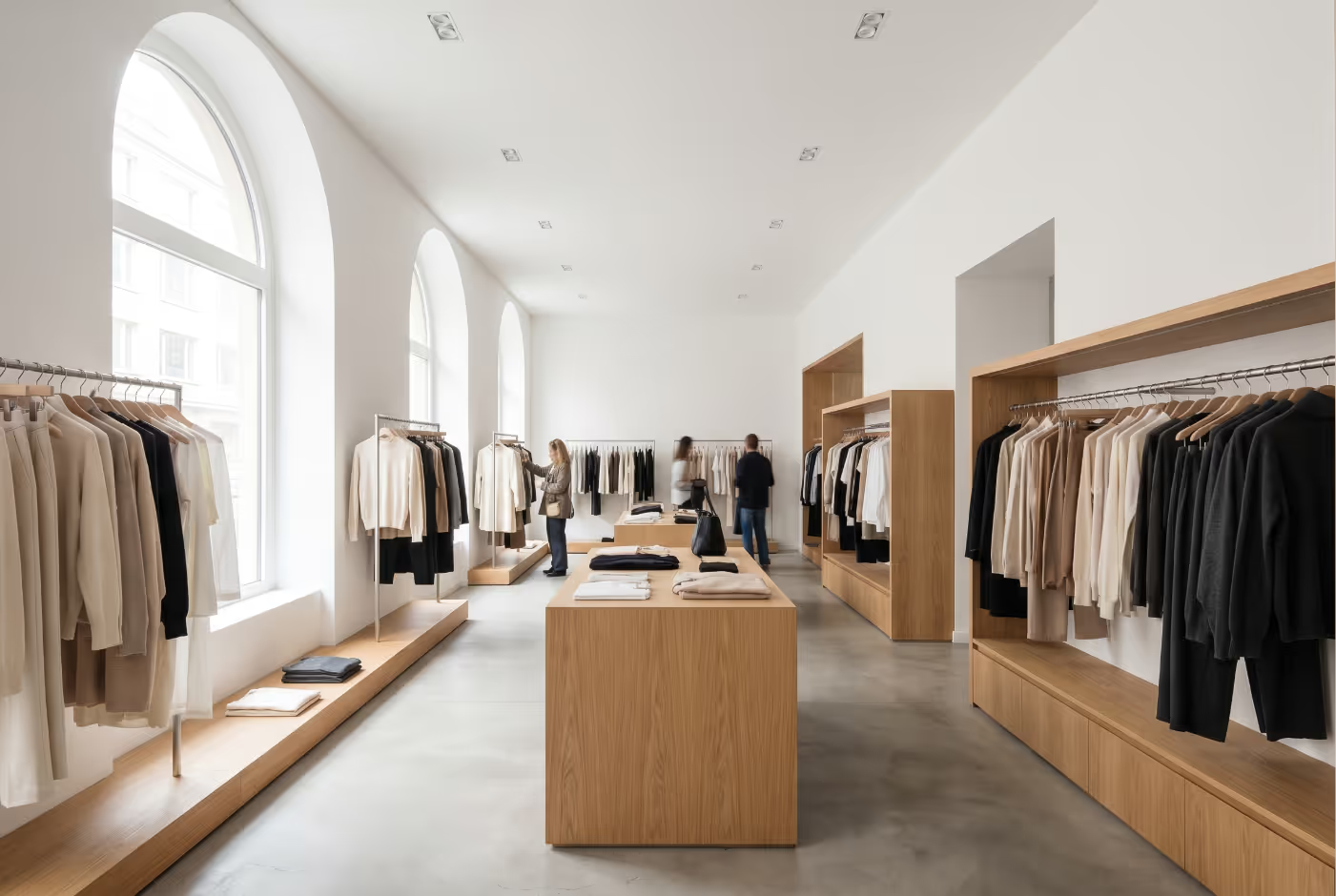
Modern consumers expect more than transactions, they seek engagement. This has accelerated the rise of experiential retail, where stores function as brand environments rather than pure sales points.
This shift is reshaping space requirements:
- Larger, more flexible units
- Integration of experiential elements and installations
- Increased importance of design and adaptability
While this model enhances leasing performance and tenant demand, it also increases operational complexity, placing greater emphasis on active asset management.
Mixed-Use Is Redefining Retail Location Strategy
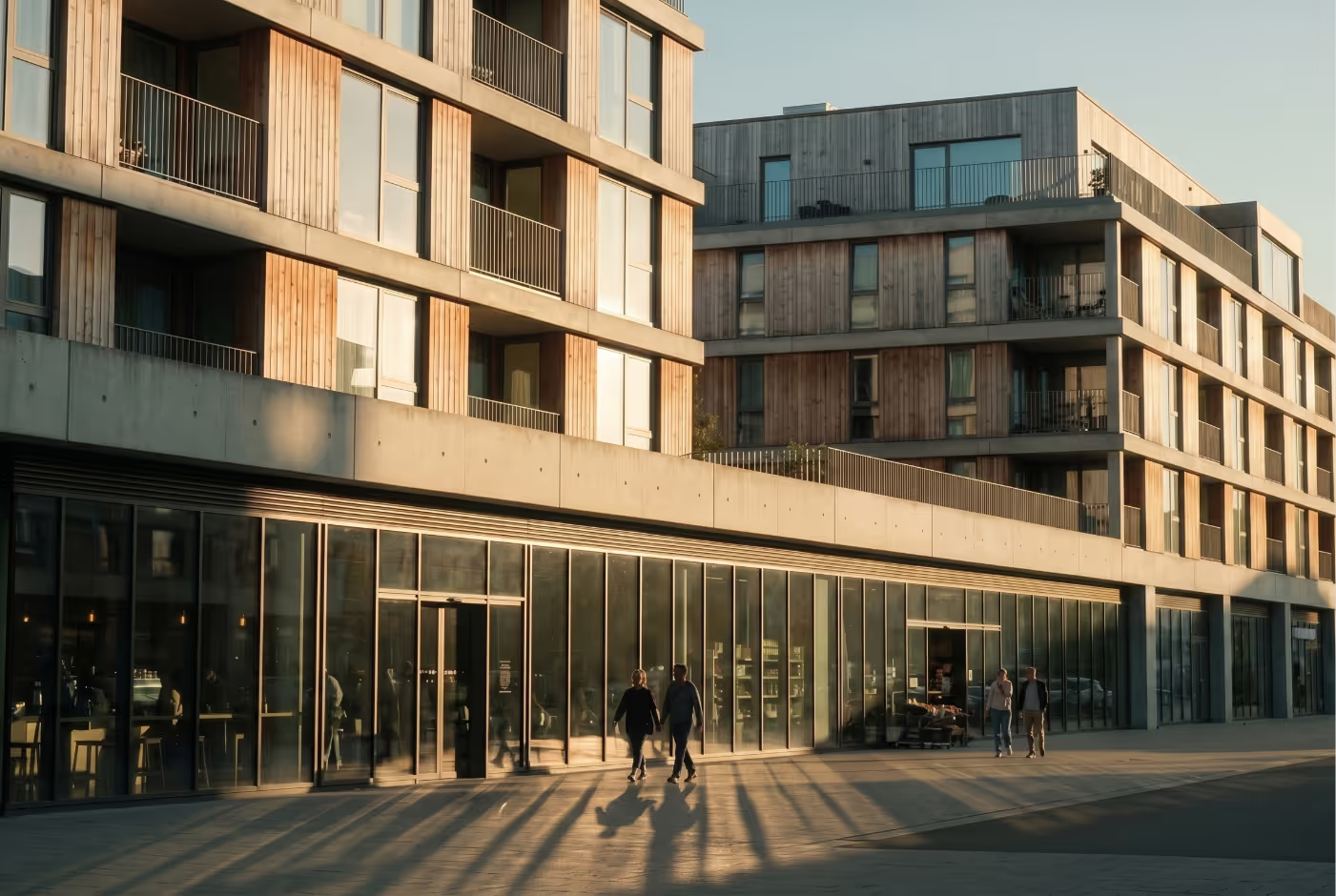
Retail is increasingly embedded within mixed-use developments, where it coexists with residential, office, and hospitality functions.
This integration transforms retail from a destination into a daily-use component of urban life:
- More stable and predictable footfall
- Reduced vacancy volatility
- Stronger leasing resilience
Rather than relying on destination shopping, retail benefits from continuous, local demand.
A More Disciplined Investment Case
European retail real estate has transitioned from perceived decline to selective resilience.
Growth is no longer broad-based. Instead, it is concentrated in assets that align with:
- Omnichannel strategies
- Experiential demand
- Urban density and mixed-use integration
Retail is no longer a general market play, it is a precision-driven asset class, where long-term performance depends on relevance, quality, and strategic positioning.

.avif)